
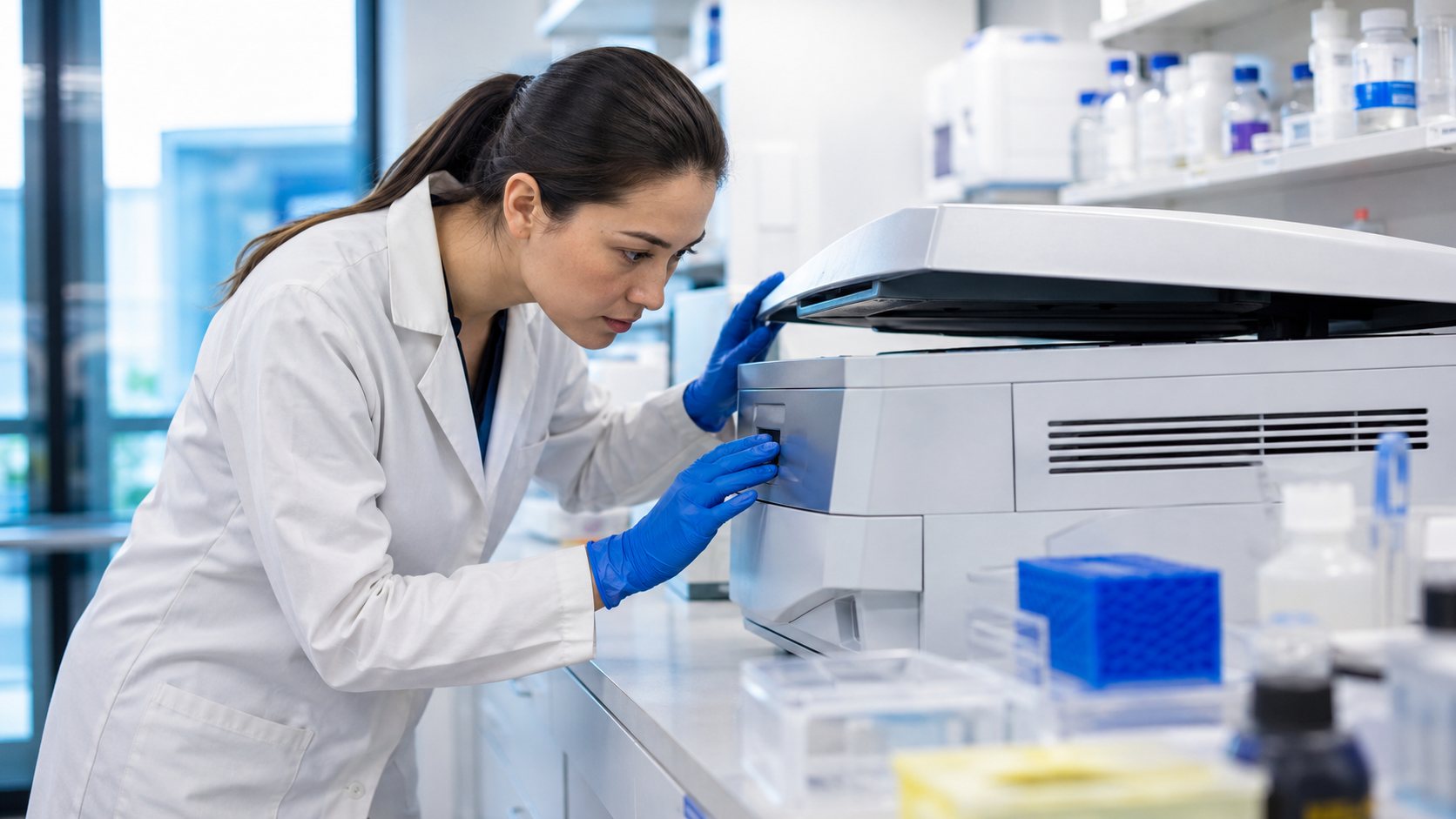
In a busy laboratory or medical facility, equipment rarely chooses a convenient time to stop working. A freezer can begin struggling overnight, a centrifuge can develop an unusual vibration in the middle of a critical workflow, or an incubator can slowly drift away from its expected temperature. Recognizing these problems early and scheduling laboratory equipment repair can help reduce unexpected downtime, protect valuable samples, and keep daily operations moving more smoothly.
Many equipment failures do not happen without warning. Small changes in sound, temperature, performance, accuracy, or operating behavior can indicate that a component is beginning to wear down. The challenge is knowing which signs deserve attention before a minor problem becomes a much larger repair.
For laboratory managers, technicians, researchers, and medical staff, paying attention to these early warning signs can make equipment management much more proactive.
1. Unusual Noises During Operation
One of the easiest warning signs to notice is a new or unusual sound.
Laboratory equipment that normally operates with a consistent hum, fan noise, or mechanical rhythm should not suddenly begin grinding, rattling, squealing, clicking, buzzing, or knocking.
Changes in sound can point to several potential issues, including:
- Worn bearings
- Loose components
- Fan problems
- Motor wear
- Compressor issues
- Mechanical misalignment
- Components rubbing against one another
A centrifuge, for example, may begin producing more vibration or noise as bearings, drive components, or other mechanical parts wear. Refrigeration equipment may develop unusual compressor or fan sounds before cooling performance becomes noticeably affected.
The important thing is to know what “normal” sounds like for your equipment. Staff members who use the same instruments every day are often the first people to notice that something sounds different.
Rather than waiting for the machine to stop operating, documenting the change and arranging lab equipment repair can give a technician an opportunity to diagnose the cause while the problem may still be manageable.
2. Temperature Starts Drifting or Fluctuating
Temperature stability is critical for many types of laboratory and biomedical equipment.
Ultra-low temperature freezers, laboratory refrigerators, incubators, environmental chambers, stability chambers, water baths, and other temperature-controlled systems are expected to maintain conditions within specific operating ranges.
One of the most important early warning signs is temperature behavior that begins changing even though the equipment has not completely failed.
Watch for:
- Longer recovery after opening a door
- Temperature fluctuations that occur more frequently
- Increasing differences between displayed and independently measured temperatures
- Equipment struggling to reach its setpoint
- Compressors running more frequently than usual
- Repeated temperature alarms
- Temperature creeping upward or downward over time
A refrigeration system does not necessarily go from perfect performance to complete failure overnight. Components can gradually lose efficiency, sensors may drift, seals may deteriorate, or refrigeration components may begin experiencing problems.
Precision Mechanical services equipment such as ultra-low temperature freezers, cryogenic freezers, laboratory chillers, stability chambers, environmental chambers, incubators, and cascade refrigeration systems.
When temperature stability begins changing, early laboratory equipment repair or diagnostic service may help identify the cause before the equipment can no longer maintain the required environment.
3. Increased Vibration or Movement
Vibration deserves particular attention with rotating laboratory equipment.
Centrifuges are an obvious example, but unexpected vibration can also occur in pumps, refrigeration systems, motors, and other mechanically driven equipment.
Some vibration is normal. A noticeable change is what should get your attention.
Possible warning signs include:
- Equipment moving slightly during operation
- Increasing vibration through a countertop or floor
- Shaking that was not previously present
- New vibration at particular speeds
- Excessive noise accompanying vibration
- Repeated imbalance warnings
With centrifuges, staff should always verify proper loading and balancing according to manufacturer instructions. If the problem continues despite correct operation, the equipment may need professional evaluation.
Persistent vibration puts additional stress on components and can make an existing mechanical issue worse.
4. Equipment Takes Longer to Complete Normal Tasks
Performance changes can be subtle.
A machine may technically still be working while taking longer to perform the same function.
You might notice that:
- A freezer takes longer to recover after loading
- An autoclave takes longer to reach operating conditions
- A chamber takes longer to stabilize
- A pump takes longer to achieve the expected vacuum
- A centrifuge takes longer to reach speed
- Equipment cycles more frequently
- Normal processes take progressively longer
Staff sometimes adapt to these changes without realizing it. What used to take five minutes becomes seven, then eight, and eventually the slower performance becomes accepted as normal.
That gradual decline can be valuable diagnostic information.
Maintaining a simple equipment performance history can make these changes easier to recognize. When a noticeable decline develops, a qualified medical equipment technician can inspect the system and determine whether maintenance, adjustment, calibration, or repair may be necessary.
5. Repeated Error Codes or Alarms
An error message that occurs once may result from an isolated operating condition. An error that keeps returning should not simply become part of the daily routine.
Repeated alarms can indicate that the equipment is detecting an operating condition outside its expected parameters.
Examples could include:
- Temperature warnings
- Pressure alarms
- Vacuum errors
- Speed errors
- Door or latch warnings
- Sensor faults
- Communication errors
- Power-related warnings
Repeatedly clearing an alarm without investigating its cause can hide a developing problem.
Keep a record of the exact error message, when it occurred, what the machine was doing at the time, and whether anything unusual happened immediately beforehand. That information can be extremely helpful during diagnostic service.
Precision Mechanical’s diagnostic services are designed to troubleshoot technical difficulties across a variety of laboratory equipment and determine an appropriate repair path.
6. Calibration Results Begin Drifting
Not every equipment problem produces a dramatic mechanical symptom.
Sometimes the first clue is data.
If calibration checks begin showing increasing drift or instruments require adjustment more frequently than they did previously, there may be an underlying issue that deserves investigation.
Calibration helps verify that equipment is performing within defined tolerances. Precision Mechanical uses NIST-traceable standards to calibrate a variety of equipment and provides calibration certificates after completion.
Staff should pay attention to:
- Increasing calibration adjustments
- Measurements approaching allowable limits
- Greater variation between checks
- Results that are inconsistent with known references
- Equipment requiring calibration more frequently
- Unexpected differences between similar instruments
Calibration drift does not automatically mean that equipment is failing. However, a pattern of increasing instability can justify additional inspection or medical equipment repair before reliability deteriorates further.
7. Equipment Is Running Hotter Than Normal
Heat is another warning sign that laboratory staff can sometimes detect early.
Motors, pumps, compressors, power supplies, and electronics naturally generate heat, but a noticeable increase from normal operating temperatures can indicate additional strain.
Warning signs may include:
- Equipment surfaces feeling unusually warm
- Fans running continuously
- Cooling fans becoming noticeably louder
- A burning or electrical odor
- Equipment shutting down after extended use
- Heat-related warnings
- Reduced performance as operating time increases
If there is a burning smell, smoke, visible electrical damage, or another immediate safety concern, stop using the equipment according to your facility’s safety procedures and manufacturer instructions.
For less urgent changes, documenting when the equipment becomes warmer and under what operating conditions can assist the technician with troubleshooting.
8. Doors, Latches, Seals, or Gaskets Are Wearing Out
Some failures begin with relatively simple mechanical components.
Doors and seals are particularly important on refrigeration equipment, incubators, autoclaves, environmental chambers, and other systems that depend on maintaining controlled internal conditions.
Look for:
- Cracked or hardened gaskets
- Doors that require extra force to close
- Latches that no longer engage smoothly
- Visible gaps around seals
- Condensation where it did not previously occur
- Frost developing around door openings
- Doors failing to remain fully closed
These problems can force equipment to work harder to maintain its intended conditions.
Precision Mechanical notes that its repair capabilities range from relatively straightforward repairs such as door latches to more extensive refrigeration system work.
Catching these smaller issues early can prevent additional stress from being placed on other components.
9. Electrical Behavior Becomes Inconsistent
Intermittent electrical problems can be frustrating because equipment may operate perfectly during one shift and malfunction during another.
Staff may notice:
- Unexpected shutdowns
- Delayed startups
- Screens flickering
- Controls responding inconsistently
- Equipment restarting on its own
- Breakers or protective circuits triggering
- Displays temporarily going blank
These symptoms can have many possible causes, so laboratory staff should avoid attempting electrical repairs unless they are specifically trained and authorized to do so.
Instead, document when the problem happens, what functions were being used, and whether other equipment on the same circuit experienced issues.
Intermittent symptoms may provide a technician with important clues during diagnosis.
10. Preventative Maintenance Is Finding More Problems
Service history itself can become an early warning system.
If technicians are finding increasing wear during scheduled maintenance, replacing components more frequently, or recommending repeated corrective work, the equipment may be entering a stage where closer monitoring is appropriate.
Preventative maintenance can include equipment checks, adjustments, lubrication, cleaning, and identifying components that may be approaching failure. Precision Mechanical specifically emphasizes using preventative maintenance to identify and predict potential component problems before they develop into more serious failures.
This is one of the major advantages of proactive maintenance. Your facility does not have to wait until equipment stops working before addressing developing issues.
Why Early Laboratory Equipment Repair Matters
When critical equipment fails unexpectedly, the repair bill is only one part of the problem.
Downtime can affect:
- Laboratory productivity
- Research schedules
- Sample storage
- Testing capacity
- Staff workloads
- Appointment or procedure scheduling
- Equipment availability
- Internal workflows
In some environments, teams may need to transfer samples, find backup equipment, reschedule work, or temporarily change normal operating procedures.
Early laboratory equipment repair gives facilities an opportunity to address equipment problems more deliberately rather than reacting to an emergency.
It can also help determine whether the equipment simply needs adjustment or maintenance, requires a component replacement, or has reached the point where a larger repair or replacement decision should be considered.
Build a Culture of Reporting Small Changes
One of the best equipment monitoring tools in any laboratory is the staff operating the equipment every day.
Encourage employees to report small changes rather than assuming they are unimportant.
A simple equipment log can document:
- Date and time
- Equipment identification
- Warning or error message
- Unusual sound
- Temperature deviation
- Vibration
- Performance changes
- Actions taken
- Whether the issue happened again
This information creates a useful history for both your internal team and your service technician.
Instead of telling the technician, “The freezer has been acting strange,” your team may be able to explain that the freezer has taken progressively longer to recover after door openings during the previous two weeks.
That level of information can make troubleshooting significantly more productive.
Do Not Wait for a Complete Equipment Failure
Laboratory and biomedical equipment represents a major investment, but the real value of that equipment comes from being available when your staff needs it.
Unusual sounds, temperature instability, vibration, recurring error codes, calibration drift, longer operating cycles, worn seals, and intermittent electrical behavior should not automatically be dismissed because the equipment is still technically running.
These symptoms are opportunities to investigate what is happening before a complete failure interrupts operations.
For laboratories, medical facilities, biotech organizations, and research teams in Everett, WA and surrounding areas, Precision Mechanical provides laboratory and biomedical equipment diagnostics, preventative maintenance, calibration, and repair services designed to help keep critical equipment operating reliably. If your equipment is showing warning signs or simply is not performing the way it used to, Request a Service or Equipment and have the issue evaluated before a small warning becomes a much larger interruption.