
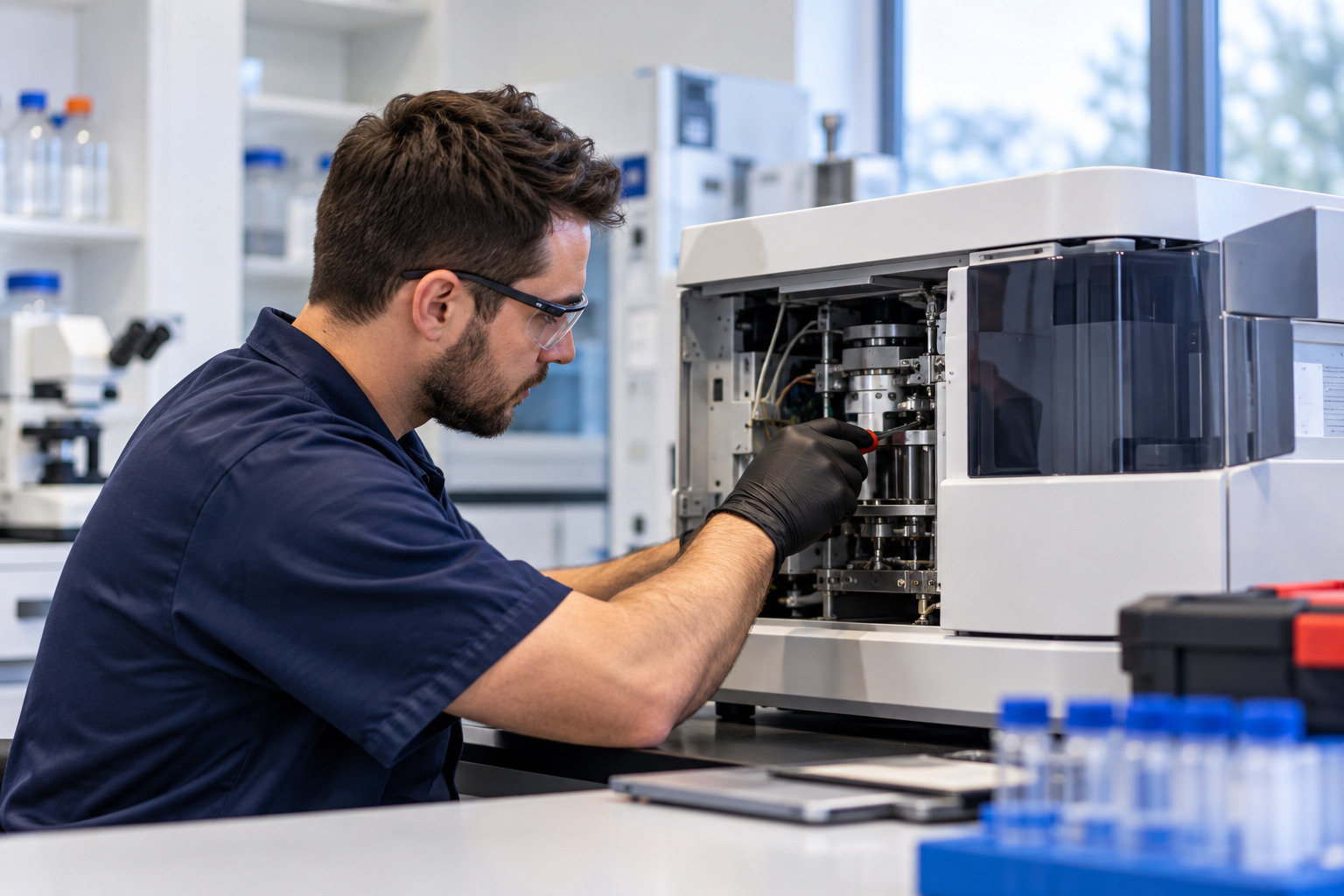
When laboratory equipment needs maintenance, troubleshooting, calibration, or repair, one of the first decisions a lab may face is whether to contact the original equipment manufacturer or work with an independent service provider. Both options can make sense depending on the equipment, its age, the problem being addressed, and the operational needs of the laboratory. Rather than assuming one approach is always better, labs should compare several practical factors before choosing between OEM and independent Laboratory Equipment Services.
For laboratories that depend on centrifuges, incubators, refrigeration systems, sterilization equipment, environmental chambers, and other specialized instruments, service decisions can directly affect workflow and downtime. Response time, technician experience, replacement parts, documentation, service flexibility, and the age of the equipment can all influence which service model makes the most sense.
Understanding OEM Laboratory Equipment Services
OEM service is provided directly by the manufacturer of a particular piece of equipment or through an authorized service network.
One of the primary advantages of OEM service is familiarity with a specific product line. Manufacturer technicians may have access to proprietary service information, manufacturer-specific diagnostic software, technical updates, and replacement components associated with the equipment they support.
For newer or highly specialized laboratory equipment, this manufacturer connection can be particularly useful. Equipment that remains under warranty may also require OEM or authorized service depending on the terms of the warranty.
However, laboratories rarely operate equipment from only one manufacturer. A single lab may have instruments from several different brands, which can mean coordinating service calls with multiple OEM service departments.
This is one reason some laboratories also consider independent service providers.
Understanding Independent Laboratory Equipment Services
Independent service companies typically support equipment from multiple manufacturers rather than representing a single brand.
This approach can be useful for laboratories with a diverse equipment inventory. Instead of contacting a different manufacturer every time a different instrument requires service, a lab may be able to work with one service provider for several types and brands of equipment.
The capabilities of independent providers can vary significantly, so laboratories should evaluate technician qualifications, equipment experience, documentation practices, parts sourcing, and available services before making a decision.
A qualified independent provider should also be willing to explain what equipment it can confidently service and when manufacturer involvement may be necessary.
Response Time Can Matter as Much as Repair Capability
When essential laboratory equipment stops working, the speed of the response can become one of the most important factors in choosing a service provider.
An unavailable centrifuge, incubator, freezer, sterilizer, or other critical instrument can interrupt testing schedules and create workflow bottlenecks. In some environments, downtime may affect multiple departments or processes.
OEM service departments may have highly specialized technicians, but technician availability can vary by manufacturer and geographic region. Depending on scheduling, a technician may need to travel from outside the area.
Independent providers with technicians operating locally may sometimes offer additional scheduling flexibility. However, availability depends entirely on the individual service company.
Labs should ask potential providers questions such as:
- How quickly are service requests normally evaluated?
- Is emergency or priority service available?
- Are technicians located within the region?
- Can troubleshooting begin remotely before an onsite visit?
- Are common replacement parts stocked locally?
- What happens if specialized manufacturer support is required?
The best provider is not necessarily the company promising the fastest arrival. Labs should consider both response time and the likelihood that the technician can accurately diagnose and resolve the problem once onsite.
Multi-Brand Expertise Can Simplify Equipment Management
Modern laboratories often contain equipment purchased from several manufacturers over many years.
That can create a complicated maintenance environment.
An OEM technician will generally have deeper specialization within a specific manufacturer’s products. For laboratories with large numbers of identical instruments from one manufacturer, that specialization may be valuable.
Independent providers can offer a different advantage through multi-brand experience.
A technician who regularly works with different equipment brands may be able to service multiple instruments during the same visit. This can simplify scheduling and reduce the number of service relationships a facility needs to manage.
Multi-brand expertise can be particularly useful for lab equipment repair in laboratories with older or mixed equipment inventories.
However, labs should not assume that every multi-brand technician has experience with every instrument. Before scheduling service, provide the manufacturer, model number, serial number, symptoms, and any available service history.
That information allows the service company to determine whether the equipment falls within its technical capabilities.
Parts Availability Can Determine How Quickly Equipment Returns to Service
Diagnosing an equipment problem is only part of the repair process. Replacement parts can sometimes become the bigger challenge.
OEM providers generally have direct access to manufacturer replacement parts that remain available for supported equipment models.
Independent providers may obtain OEM components, compatible replacement parts, refurbished components, or parts through specialized distributors depending on the equipment and repair.
Neither approach automatically guarantees faster parts availability.
For newer equipment, OEM components may be readily available. For older equipment, manufacturers may eventually discontinue certain parts or stop supporting an entire model.
Independent service providers sometimes have broader sourcing options for older instruments. In other situations, a proprietary component may only be available through the manufacturer.
Before authorizing a repair, laboratories can ask whether the needed component is OEM, refurbished, or aftermarket and whether using it affects equipment specifications or warranty coverage.
Equipment Age Should Influence the Service Strategy
The age of the equipment is another important consideration.
New laboratory instruments still covered by the manufacturer’s warranty may be best handled through the OEM or an authorized provider, particularly if outside service could affect warranty coverage.
The situation changes as equipment ages.
Once the warranty expires, laboratories often have more flexibility regarding who performs maintenance and repair. Independent service providers may become particularly valuable when a facility is trying to extend the practical service life of older equipment.
Older instruments can also create unique challenges.
Manufacturers may discontinue support, replacement components may become harder to locate, and newer OEM technicians may have limited experience with legacy equipment.
An experienced independent technician who regularly works on older systems may have familiarity with equipment that is no longer actively supported by its manufacturer.
At the same time, there eventually comes a point when repeated repairs no longer make financial or operational sense.
A good service provider should be willing to tell a laboratory when continued repair may not be the best option.
Documentation Matters in Regulated Laboratory Environments
Repairing the equipment is only one part of laboratory service.
Documentation can be equally important.
Depending on the laboratory environment and the equipment being serviced, facilities may need detailed service reports showing what was inspected, what problems were identified, what components were replaced, and what work was completed.
Maintenance records can also help laboratory managers understand recurring equipment problems and make better decisions about repair versus replacement.
When evaluating Laboratory Equipment Services, ask what documentation is provided after each service visit.
Reports should clearly identify the equipment and describe the work performed. When applicable, they should include measurements, testing results, replaced components, technician information, and recommendations for additional maintenance.
For laboratories operating under internal quality programs or external regulatory requirements, documentation practices should be discussed before service begins.
A qualified medical equipment technician or laboratory service technician should understand that completing the repair and documenting the work are both important parts of the service process.
Service Flexibility Can Reduce Operational Disruption
Laboratories do not always operate on convenient service schedules.
Some instruments may run continuously. Others may only be available for maintenance during specific windows between testing cycles.
This makes scheduling flexibility important.
OEM providers often work within established service territories and manufacturer scheduling systems. Independent providers may have more flexibility in coordinating multiple pieces of equipment during the same visit or creating maintenance schedules around laboratory operations.
Labs with several instruments can also explore preventive maintenance programs rather than waiting until equipment fails.
Regular inspection and maintenance may help identify worn components, unusual operating conditions, or developing problems before they cause unexpected downtime.
The right service arrangement depends on the facility. A laboratory with two instruments may need occasional on-demand service, while a larger facility managing dozens of pieces of equipment may benefit from an organized maintenance schedule.
Cost Should Be Evaluated Beyond the Service Call
Cost is naturally part of the decision between OEM and independent service.
But comparing only hourly labor rates or service call charges can be misleading.
The total cost of equipment service can include technician travel, diagnostic time, replacement parts, repeat visits, calibration, documentation, and most importantly, equipment downtime.
A lower-cost repair that requires several visits may ultimately cost more than a higher initial service charge that resolves the issue quickly.
The opposite can also happen. A laboratory may spend considerably more on manufacturer service when an experienced independent technician could have completed the same repair using readily available parts.
When comparing service options, consider total value rather than simply the initial quote.
The same principle applies to medical equipment repair. The goal should be to restore the equipment safely and reliably while minimizing unnecessary downtime and avoiding repairs that no longer make financial sense.
When OEM Service May Make More Sense
There are circumstances where manufacturer service may be the most practical choice.
New equipment that remains under warranty is an obvious example. Highly proprietary systems that require manufacturer-specific diagnostic tools, software access, or restricted replacement components may also require OEM involvement.
Laboratories may also prefer manufacturer service when performing certain upgrades, recalls, firmware updates, or modifications directly associated with the equipment’s original design.
In these situations, access to the manufacturer can outweigh other considerations.
When Independent Service May Make More Sense
Independent service can be particularly useful for laboratories managing equipment from several manufacturers.
Instead of maintaining separate service relationships for every brand, facilities may be able to consolidate a significant portion of their preventive maintenance and repair needs with one provider.
Independent providers may also be worth considering for equipment that is no longer under warranty, older instruments with limited manufacturer support, and facilities that value local response capabilities or scheduling flexibility.
The key is finding technicians with demonstrated experience servicing the specific equipment involved.
Choosing Based on the Equipment and the Situation
There does not need to be a permanent choice between OEM and independent service.
Many laboratories use both.
A facility might rely on manufacturer support for a newer proprietary instrument while using an independent provider for routine maintenance and repairs on older or more common equipment.
This hybrid approach allows laboratory managers to make service decisions based on each instrument rather than forcing the entire facility into a single service model.
Before selecting a provider, consider the equipment’s age, warranty status, operational importance, service history, manufacturer support, available replacement parts, required documentation, technician expertise, expected response time, and overall repair cost.
Ultimately, the goal is not simply finding someone who can repair laboratory equipment. It is developing a service strategy that helps the laboratory maintain reliable equipment while minimizing disruptions to its work.
For laboratories and medical facilities in Everett, WA and the surrounding region, Precision Mechanical provides laboratory equipment service, maintenance, troubleshooting, and repair support for a variety of equipment needs. Whether you are dealing with an unexpected equipment problem, planning preventive maintenance, or deciding whether an aging instrument is still worth repairing, you can Request a Service or Equipment to discuss your laboratory’s specific needs.