
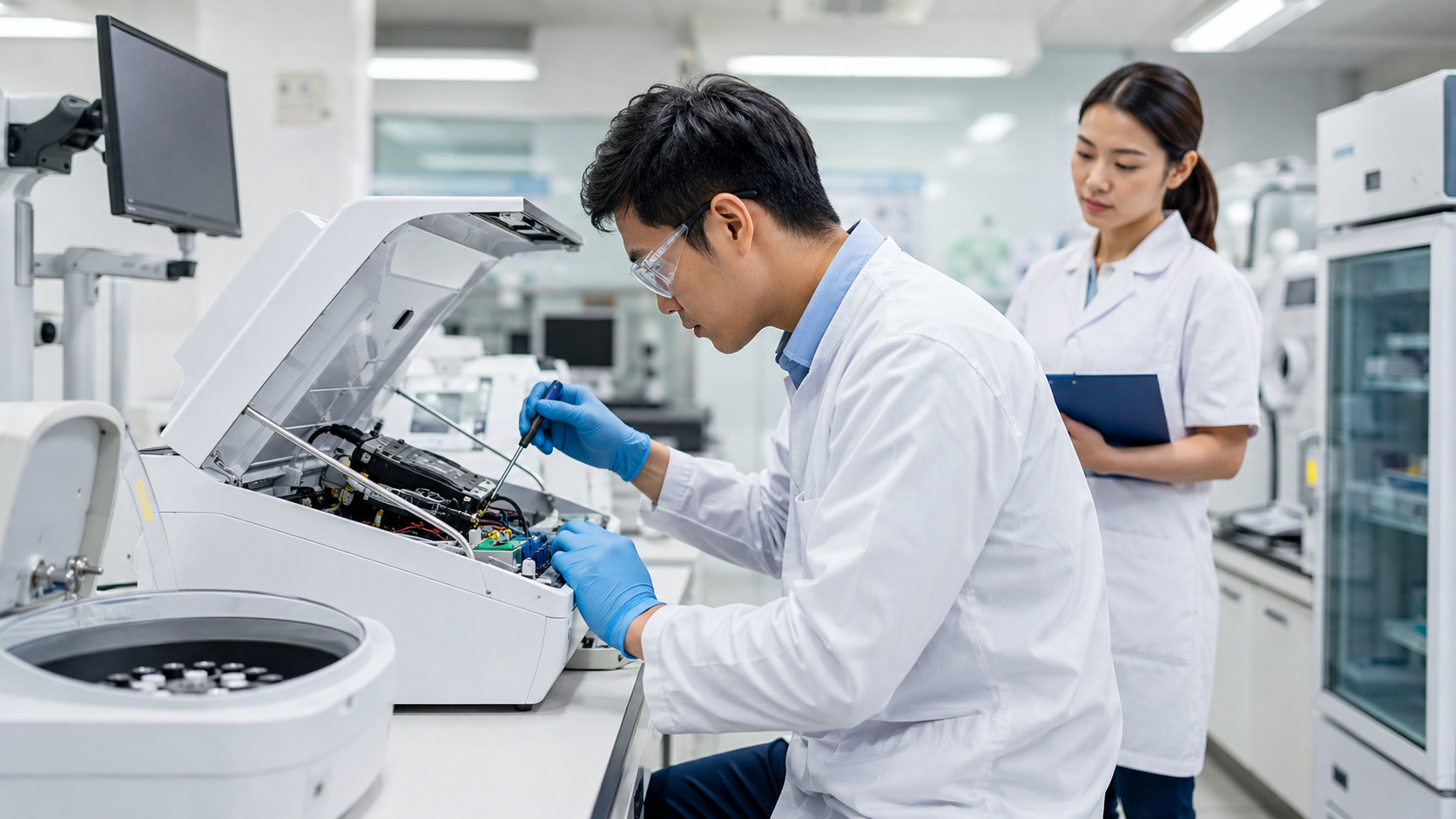
When patient care depends on accurate testing, reliable diagnostics, and properly functioning machines, laboratory equipment repair becomes more than a maintenance task. It becomes part of the safety system that protects patients, supports medical staff, and helps labs deliver results they can trust. Whether your team uses centrifuges, incubators, autoclaves, sterilizers, refrigerators, freezers, analyzers, or other critical lab machines, even a small performance issue can create bigger problems if it is ignored for too long.
In medical and laboratory environments, equipment is expected to perform consistently every day. Staff need machines to heat, cool, spin, sterilize, measure, store, and process materials with precision. When equipment starts drifting out of range, making unusual sounds, showing inconsistent readings, or failing unexpectedly, it can affect more than productivity. It can affect the quality of care being delivered.
That is why routine service, timely repairs, and support from experienced technicians matter so much. Proper lab equipment repair helps reduce downtime, protect samples, support accurate results, and create a safer environment for both patients and staff.
Reliable Equipment Supports Accurate Results
One of the biggest ways equipment repair protects patient safety is by supporting accurate lab results. Medical decisions often depend on test results, sample quality, and the ability of lab machines to perform within required parameters. If equipment is not working correctly, results can become delayed, inconsistent, or unreliable.
For example, a centrifuge that is not spinning at the correct speed may affect sample separation. A refrigerator or freezer that cannot hold the proper temperature may compromise stored materials. An incubator with unstable temperature control may affect cultures or testing conditions. A sterilizer that is not functioning properly may create infection control concerns.
These issues may not always be obvious right away. Sometimes, equipment still appears to be running, but it may not be performing correctly behind the scenes. That is where professional inspection and repair become important. A trained medical equipment technician can identify early warning signs, test machine performance, and make the right adjustments before the issue creates bigger risks.
Repair Helps Prevent Delays in Patient Care
In a busy lab or medical facility, downtime can quickly create a ripple effect. When equipment stops working, staff may have to pause testing, transfer samples, reschedule procedures, outsource work, or wait for replacement equipment. These delays can slow down decisions for patients who are waiting on results.
For lab and medical staff, this creates stress and extra work. For patients, it can mean waiting longer for answers. In some settings, a delay in diagnostics can affect treatment plans, discharge decisions, medication adjustments, or follow-up care.
Preventive maintenance and timely repair help keep equipment available when staff need it. Instead of waiting until a machine fully fails, ongoing service allows teams to catch problems earlier. This helps reduce emergency breakdowns and keeps daily operations moving.
Laboratory equipment repair is especially important for facilities that rely on specialized machines that cannot be easily replaced at a moment’s notice. When a critical machine goes down, having a trusted repair partner can make the difference between a short service interruption and a major operational setback.
Equipment Repair Helps Protect Samples and Materials
Many labs handle materials that are sensitive to temperature, timing, contamination, or movement. Samples, reagents, cultures, vaccines, medications, and biological materials often need very specific storage and handling conditions. If a machine is not operating correctly, those materials may be at risk.
A lab refrigerator that fluctuates in temperature can threaten stored samples. A freezer that struggles to maintain temperature can create concerns with material integrity. An autoclave that does not sterilize correctly can increase contamination risks. A water bath or incubator that runs too hot or too cold can affect test conditions.
These are not just equipment problems. They are patient safety concerns because the condition of the sample or material may influence the outcome of testing or treatment.
Routine service helps verify that equipment is performing as expected. If something is off, repair work can restore proper function before materials are lost or compromised. This protects both the lab’s workflow and the patients who depend on accurate handling behind the scenes.
Repair Supports Infection Control
Infection control is a major part of patient safety. Equipment used for sterilization, cleaning, storage, and processing must perform properly to help maintain a safe environment. When machines used for sterilization or decontamination are not working correctly, the risks can grow quickly.
Autoclaves, sterilizers, washers, and related equipment need regular inspection and service to ensure they are heating properly, sealing correctly, and completing cycles as intended. A machine that looks like it completed a cycle may still have problems if the temperature, pressure, timing, or mechanical function is not correct.
Medical equipment repair helps identify issues like worn seals, sensor failures, heating problems, control malfunctions, drainage issues, and other mechanical or electrical concerns. Addressing these problems helps labs and healthcare teams maintain safer processes.
For staff working with biological materials, sterile instruments, or sensitive testing environments, dependable equipment is a key part of reducing preventable risks.
Small Issues Can Become Bigger Safety Problems
Most equipment failures do not happen out of nowhere. In many cases, there are early warning signs. Staff may notice a machine is louder than usual, taking longer to complete cycles, producing inconsistent results, showing error codes, leaking, overheating, or struggling to maintain temperature.
It can be tempting to work around these issues when the machine still appears usable. But small issues often grow into larger failures. A minor calibration problem may turn into inaccurate readings. A worn part may create a shutdown. A small leak may damage internal components. A temperature fluctuation may become a full cooling failure.
Prompt repair keeps these problems from snowballing. It also helps extend the life of expensive equipment. For many facilities, repairing a machine early is more cost-effective than waiting for a major breakdown that disrupts operations and requires more extensive service.
A Skilled Technician Knows What to Look For
Lab and medical machines are complex. They often include mechanical components, electrical systems, sensors, controls, motors, compressors, pumps, heating elements, seals, displays, and software-related functions. A qualified medical equipment technician understands how these systems work together.
That experience matters because the cause of an issue is not always obvious. A temperature problem may be related to a sensor, compressor, door gasket, control board, airflow issue, or environmental factor. A centrifuge vibration may point to imbalance, worn parts, motor issues, or rotor concerns. An autoclave problem may involve pressure, heat, drainage, seals, or controls.
Professional troubleshooting helps find the real cause instead of guessing. This allows the equipment to be repaired correctly and safely. It also helps reduce repeat breakdowns that waste time and create frustration for staff.
Repair Helps Staff Work With Confidence
Patient safety is not only about machines. It is also about the people using them. Lab staff and medical teams need confidence that the equipment they operate is dependable. When machines are unreliable, staff may need to double-check results, repeat work, move samples, or adjust workflows. That adds pressure to an already demanding environment.
Reliable equipment helps staff focus on patient care, testing accuracy, and efficient operations. It reduces distractions and creates a more predictable workflow. When equipment is properly maintained and repaired, staff can work with greater confidence knowing the machines they depend on are ready for use.
This is especially important in high-volume settings where equipment is used throughout the day. Even one unreliable machine can slow down the entire process.
Preventive Service Is Better Than Emergency Repair
Emergency repairs are sometimes unavoidable, but they should not be the main maintenance strategy. Waiting until equipment fails can lead to higher costs, longer downtime, and more disruption. Preventive service helps identify problems early and keeps machines in better condition.
A strong service plan may include inspections, cleaning, calibration checks, performance testing, part replacement, and documentation. This helps equipment operate more consistently and gives managers better visibility into machine condition.
For labs and healthcare facilities, preventive maintenance is a practical way to support safety, compliance, and budget control. It also helps teams plan ahead instead of reacting to surprise breakdowns.
Laboratory equipment repair works best when it is part of a larger equipment management strategy. Instead of only calling for help when something breaks, facilities benefit from building a service relationship with technicians who understand their equipment, workflow, and urgency.
Local Support Matters for Medical and Lab Facilities
When equipment goes down, response time matters. A repair company that understands local facilities and can provide timely service is valuable for labs, clinics, hospitals, research facilities, and medical offices. For teams in and around Everett, WA, having access to responsive equipment service helps reduce downtime and keep operations moving.
Local support also makes communication easier. Your team can explain what happened, what equipment is affected, and how urgent the issue is. A knowledgeable repair partner can help prioritize service based on risk, impact, and equipment function.
Whether your team needs lab equipment repair, medical equipment repair, or help evaluating whether equipment should be repaired or replaced, having a dependable service partner makes the process less stressful.
Repair Can Extend the Life of Critical Equipment
Medical and laboratory equipment is a major investment. Replacing machines too soon can be expensive, but continuing to use unreliable equipment can also create risk. Repair helps bridge that gap by restoring function, improving performance, and helping facilities get more value from existing equipment.
In many cases, a machine may only need a part replacement, adjustment, calibration, cleaning, or component repair to return to dependable service. A skilled technician can help determine whether repair is practical or whether replacement should be considered.
This is important for budget planning. Instead of making rushed decisions during a breakdown, facilities can better understand the condition of their equipment and plan for future upgrades when needed.
Patient Safety Starts Behind the Scenes
Patients may never see the lab machines, sterilizers, refrigerators, freezers, or diagnostic equipment that support their care. But those machines still play a major role in the patient experience. Accurate results, safe storage, proper sterilization, and efficient workflows all contribute to better care.
That is why equipment repair should never be treated as an afterthought. A well-maintained lab supports better outcomes, fewer delays, safer processes, and more confident staff. Every repaired seal, calibrated sensor, restored motor, or corrected temperature issue helps protect the systems patients depend on.
Laboratory equipment repair is one of the quiet but critical ways healthcare and lab teams protect patient safety every day.
If your facility needs dependable support for lab or medical equipment, Precision Mechanical is here to help. Our team provides trusted service for labs, medical facilities, and organizations that rely on properly functioning equipment to keep operations safe and efficient. To schedule service or ask about equipment support, Request a Service or Equipment today.