
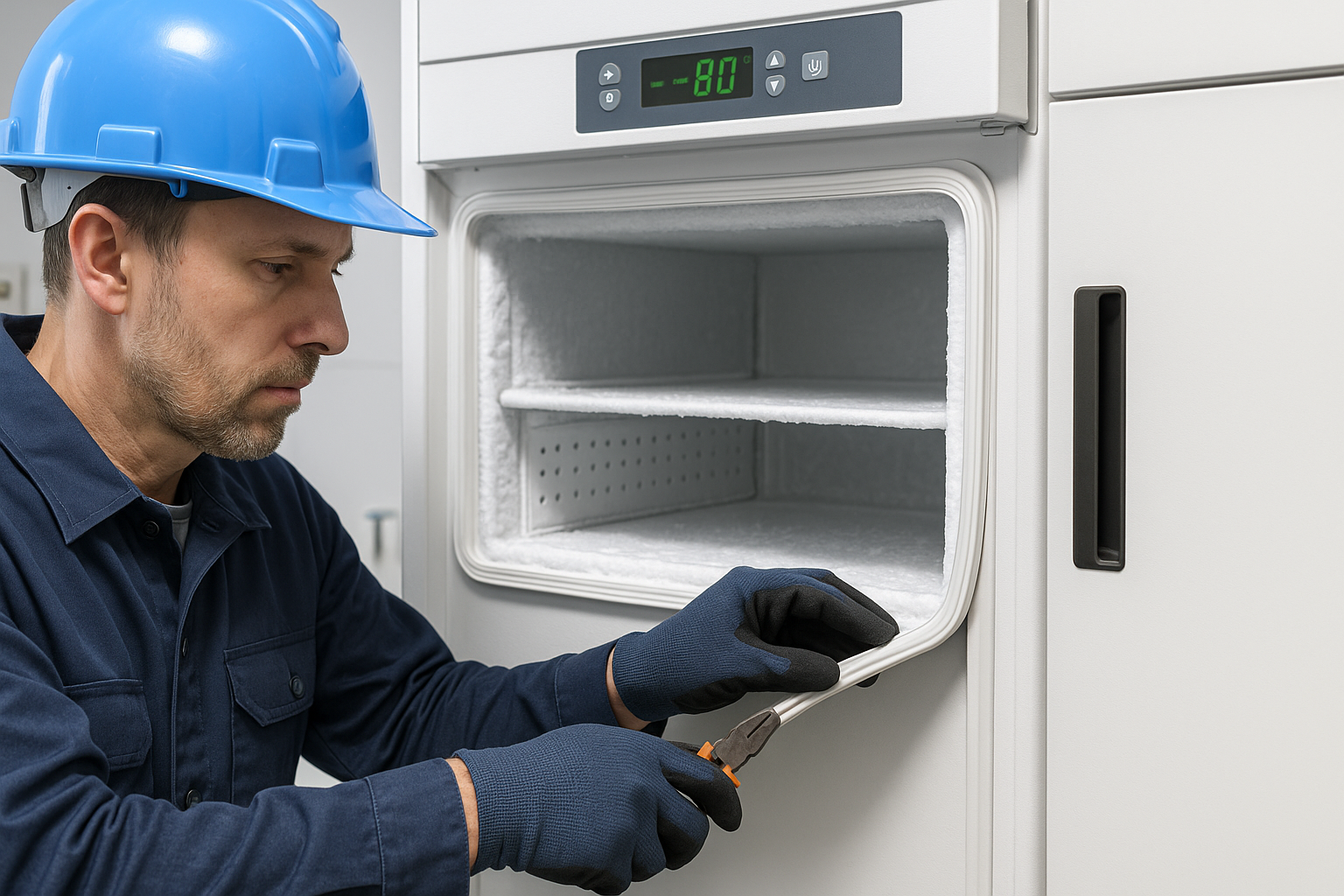
In the high-stakes world of biomedical research, the reliability of your commercial freezer cannot be overstated. From preserving invaluable biological specimens to safeguarding delicate reagents and vaccine samples, a malfunctioning freezer can disrupt experiments, compromise data integrity, and even jeopardize patient safety. For lab managers and biomedical staff, routine maintenance isn’t just good practice—it’s vital to maintaining the chain of custody, ensuring consistent results, and preventing costly downtime. In this guide, we’ll explore essential maintenance steps for your commercial freezer, why they matter, and how to implement them effectively.
Understanding Different Lab Freezer Types
To tailor your maintenance plan effectively, it’s important to recognize the range of freezer types in a biomedical setting:
- Laboratory Equipment such as refrigerators or standard freezers often operate at –20 °C.
- Commercial Chest Freezer models offer larger storage capacities and are ideal for bulk reagent storage.
- Ultra‑low temperature freezer units maintain temperatures as low as –80 °C, crucial for long-term storage of sensitive samples like RNA, DNA, or viral cultures.
- Cryogenic freezer systems go even further, reaching liquid-nitrogen levels (–196 °C) for specialized applications like stem cell or tissue preservation.
Each type plays a role in your lab’s ecosystem, and each comes with unique maintenance needs.
Why Maintenance Matters
- Avoid Sample Loss & Experimental Disruption
A poorly performing commercial freezer can experience temperature fluctuations, risking sample quality or entire biobanks. Repairing or replacing thousands of dollars’ worth of specimens is far more expensive and time-consuming than routine upkeep. - Ensure Regulatory Compliance
Biomedical labs often undergo audits by authorities such as the FDA and CDC. Maintenance logs, temperature validation, and alarm calibration are non-negotiable elements in audit readiness. - Reduce Energy Costs
Dirty coils and aging compressors force freezers to work harder, consuming more energy. Regular maintenance reduces strains on refrigeration systems, extending equipment lifespan and utility savings. - Prevent Downtime & Emergency Replacements
Unexpected freezer failures can halt research, delay publications, or compromise patient trials. Proactive maintenance minimizes these disruptions, and emergency replacements are often hard to source on short notice.
Routine Maintenance Checklist for Commercial Freezers
Here’s a detailed, easy-to-follow checklist that covers all key commercial freezer types:
|
Task |
Frequency |
Why It Matters |
|
Inspect Door Seals & Gaskets |
Weekly |
Prevent air leaks; maintain stable internal temp |
|
Clean Condenser Coils |
Quarterly (or monthly in dusty areas) |
Enhances efficiency, protects compressor |
|
Defrost & Clear Frost Buildup |
Monthly or as needed |
Frost impedes airflow and cooling efficiency |
|
Check Temperature & Alarm Systems |
Daily, verify logs monthly |
Ensures early detection of issues and audit compliance |
|
Review Compressor & Refrigerant Levels |
Annually |
Maintains cooling power and protects against breakdown |
|
Lubricate Moving Parts |
Per manufacturer |
Avoids wear and prolongs system lifespan |
|
Validate Calibration |
Bi annually |
Ensures accuracy, especially for ultra-low and cryogenic freezers |
|
Backup Power Systems |
Yearly |
Guarantees samples stay stable during power outages |
|
Thorough Internal Cleaning |
Quarterly |
Ensures contamination-free environment, avoids mold or fungus |
Dive Deeper: Key Maintenance Actions
Seal & Gasket Inspection-
Cold air escaping through worn seals forces the freezer to overcool. Inspect seals for cracks or brittleness weekly, replacing them at the first sign of wear. Seal replacements are cost-effective, and often improve energy usage significantly.
Condenser Coil Cleaning-
Dust-buildup on condenser coils is silent freezer-killer. Quarterly coil cleaning—using vacuum, brush, or approved cleaner—can reduce energy consumption by up to 20%. Neglecting coils raises running temperatures, damaging compressor motors.
Defrosting-
Ice accumulation affects airflow and energy efficiency. For frost-prone units, manual defrosting once a month helps maintain temperature stability. Automatic defrost mechanisms must still be checked for buildup and drained properly.
Alarm Systems & Temperature Monitoring-
Freezers should be fitted with independent temperature tracking devices, preferably centralized to building management. Check these alarms daily and test them monthly to ensure they trigger properly and integrate with maintenance logs.
Compressor & Refrigerant Checks-
A failing compressor or low refrigerant level leads to gradual performance dips. Annual inspections identify wear signs—making timely repairs can prevent complete failures.
Calibration-
Ultra-low and cryogenic freezers require precise calibration, typically using certified thermometers. Bi-annual validation ensures they’re holding at –80 °C (or colder), as required for high-value samples.
Backup Power-
Backup systems—UPS or generators—are essential. Test batteries and generators annually to confirm they engage during power losses. Schedule tests during low-traffic hours to minimize impact.
Practical Tips for Staff
- Assign Ownership: Delegate freezer maintenance tasks to specific lab technicians or engineers. Rotate roles monthly to build familiarity.
- Use Digital Logs: Cloud- or server-based logging makes audits easier and enables real-time alerts for temperature excursions.
- Train Your Team: Conduct quarterly trainings on recognizing and responding to freezer issues—from alarm response to documentation.
- Keep Spare Parts: Maintain a supply of extra gaskets, filters, and fuses to quickly address common issues.
- Partner with Professionals: Enlist HVAC or industrial refrigeration specialists for preventative checks, annual servicing, and calibration certification.
When to Call in a Specialist
Some maintenance tasks are best handled by professionals:
- Refrigerant Repairs – handling refrigerants requires certifications and tools that your in-house staff may not have.
- Compressor Replacement – a major task with downtime that needs HVAC coordination.
- Deep Calibration – certain freeze units require certified calibrators to confirm compliance with regulatory standards.
Future-Proofing With Smart Freezers
Modern commercial freezers now include advanced features to simplify maintenance and oversight:
- Remote Monitoring & Alerts: Real-time temp updates via mobile or web dashboards.
- Automatic Defrost Timers: Many require battery replacements and periodic checks.
- Enviro‑Friendly Refrigerants: These reduce environmental impact and may come with longer service intervals.
- Ease-of-Service Design: External controls, accessible coil layouts, and modular components simplify upkeep.
For any biomedical facility, proactive maintenance of your commercial freezer means safeguarding mission-critical assets—be they samples, reagents, or clinical trial specimens. Routine tasks like inspecting seals, cleaning coils, checking alarms, and validating calibration might seem mundane, but they’re essential steps in avoiding sample loss, energy waste, and regulatory headaches.
By integrating this maintenance checklist into your lab’s SOPs, assigning responsibility, and engaging professional servicing when needed, you ensure the reliability and regulatory compliance of your lab’s refrigeration infrastructure.
Maintain Confidence in Your Cold Chain
Get ahead of equipment failure—schedule your next freezer inspection or servicing now. Trust Precision Mechanical to keep your freezers running at peak performance. Our team specializes in biomedical-grade equipment maintenance in Everett, WA for cryogenic, ultra‑low, and commercial chest freezers.
Ready to request a service or equipment upgrade? Request a Service or Equipment today and ensure your lab continues to deliver reliable, compliant results.
Precision Mechanical – your partner for dependable cold storage in biomedical labs.